
life transitions

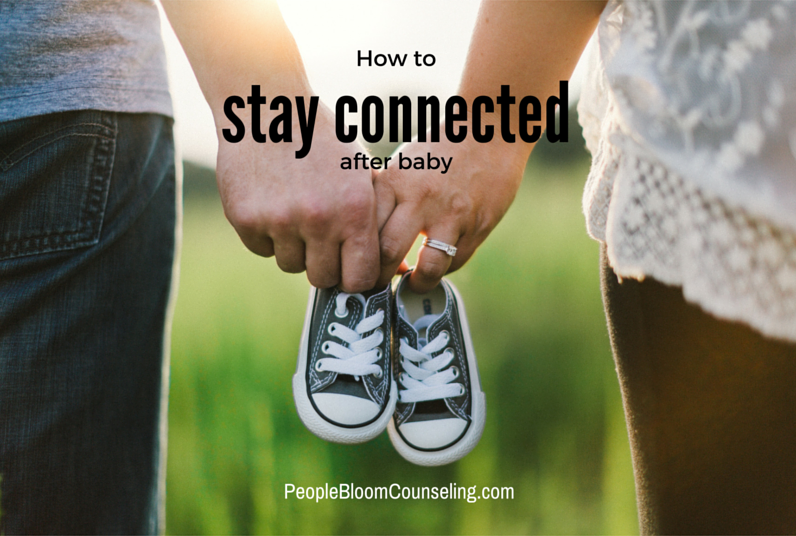
Marriage Problems after Baby? 11+1 Tips to Stay Connected to your Partner

Drew Hays/unsplash.com

Drew Hays/unsplash.com

Cover your eyes if you don't want to read this: It's not looking good after kids

Are you having marriage problems now that your baby is born? You're not alone. My husband recently shared with me the CNN article about the steep decline in marital satisfaction following parenthood. I remember reading such research back in grad school, so it was definitely old news. However, it got me thinking whether the decline has to be this drastic.

Ready for your marriage to go down the toilet?

True, parenting is a major life transition, and this complicated by the fact that you don't know who's coming out on the other side and how their temperament might fit with yours, or not. Sleepless nights, little time to yourself, and a disruption to everything you've ever known. Is there still time and energy to connect with your partner?

I want to say yes!

Here are 11+1 tips to stay connected to your partner after baby:

  1. Use humor – if this is your first child, in all likelihood, a lot of things ring true in Brian Gordon's comic about parenthood. Laugh at yourself and with each other. Is it an interesting finding in baby poop that wasn't well digested? Your mismatched socks? Your partner's overgrown beard? Take time to laugh. Don't take yourselves too seriously.
  2. Admire your partner as a co-parent – this will be your first time witnessing your partner as a father/mother. How are they different with the baby? The same? Can you take a moment to watch the two interact from a distance? How does this make you appreciate your partner all the more?
  3. Make use of every moment – is it the first few minutes of your partner walking through the door or when you pass by each other in the hall? Share a touch, a kiss, a something that lets each other know you're still there. These brief moments of connection can go a long way.
  4. Do the little things – aside from sharing a moment in between feedings, what were the little things you used to do for each other, to show that the other mattered? Is it a quick text with Emoticons, picking up his preferred brand of toothpaste, or making coffee in the morning? When you're tired and your patience is thin, knowing that you're remembered keeps you going.
  5. Hire a sitter – take a break, go out, or do nothing. Time away from your kid and chores makes you a better parent, a better partner. If you must use this time to run errands, remember to grab yourself a little treat.
  6. Set up date nights early on – while it can no longer be every Friday, unless you have a plan, months can go by without the comfort and familiarity of time together. Go out for a movie, a nice dinner, a stroll in your neighborhood. While it may seem like you have left someone important at home, taking the time to connect with your partner can make co-parenting more enjoyable.
  7. Focus on each other during date nights – if you're not careful, topics around your kid's music lessons, her playdate with Sally or even how you've organized the baby's drawers can quickly seep into your date night. Set a rule to minimize business talk during your night out. How is the other person doing? What's happening at work? What did you used to talk about before the baby came along? Revisit that.
  8. Take turns baby sitting - “me time” and time with friends are still important, even though you're pooped and your priorities have shifted. Put it on the calendar that the 2nd Tuesday is your coffee night and the 4th Thursday is bball with his buddies. When you encourage personal interests outside of the home as new parents, you're cognizant of each others' needs as individuals. That's another way of giving to each other.
  9. Keep the conversation going – parenting brings out the worse in all of us. Things that work one day no longer works the next because the kid changes on you. Keep talking about expectations around roles, chores, and responsibilities. Be willing to adapt to the needs and preferences of the kid, and each other.
  10. Visit each other at work with the child – you don't have to wait until Bring Your Kids to Work Day. Set an intention that the visit is as much about seeing your kid and showing him around as it is about meeting with your partner midday.
  11. Involve your child – there are ways to be mindful of your partner while you're with your child. You can talk to them early on about mom's favorite food, dad's favorite color, and let the child pick up something at the store for the other parent. That's hopefully sending the message, “I love you and I'm teaching our child ways to love you too.”

And here's a bonus and my all time favorite:

  1. Use terms of endearment – it often pains me to hear partners be called, “mommy” or “daddy” following the birth of a child. What happened to “Babe,” “Honey,” “Wifey” or “Apple Streusel”? Okay, maybe not “Apple Streusel,” but you get the idea. As much as possible, call your partner the names they were once known for. It's a reminder that you were partners before you were parents.

Another bonus: if this is not your first rodeo, here's an earlier post about connecting with your child around bringing home a second baby.

Mitigating the loss

While I won't argue against 30 years of studies that show time and time again a decline in relationship satisfaction following children, I do believe there are ways to soften the blow. Let me know how I can help!


Ada Pang, MS, LMFT is the proud owner of People Bloom Counseling, a Redmond counseling practice in WA. She loves helping individuals and couples grow through life transitions, parenthood being one of them. She's usually overjoyed when her husband brings home the occasional dinner. She's a firm believer that we tend to remember the sweet little things.

How Standup Paddle Boarding Informs my Life and Counseling Practice

I'm out and about, living my life and I see stories that tie into how I practice counseling. Here is an example of such.

SUP

I first tried SUP in O'ahu. I took a lesson with my husband, mother-in-law, and brother-in-law and we were in very calm waters inside a canal. I was the only one who didn't fall in. I used to be proud of that, except when I look back, I knew it was because I was the only non-swimmer and was tensed the whole time. I really didn't enjoy the lesson as much as everyone else. They were laughing and splashing around and I was, just scared.

Is it possible that falling into the water is a part of the SUP experience?

SUP + falling

Now a few years later, I've grown less afraid of water and have been out on many more SUP adventures. I've decided that falling in is inevitable: a friend can threaten to tackle me, I can collide into my husband, the currents might be too strong... When I fall in, it is an opportunity for me to work on my chicken, airplane, solider stroke. And while there really isn't a graceful way to fall, it is still preferred to fall directly into the water rather than to hit the board first.

SUP + waves

It's not always calm like the canal. Boats and jet skis pass by, it's breezy, or the water is just choppy. I've learned that if we waited until it's calm, we might never head out.

It's tempting to sit down when the waves come. Sometimes I sit too long before I get back up. And I've tried avoiding the waves, only to have them catch up with me. It seems counter-intuitive, but the most effective way to go through the waves is to face them head on. When I point the nose of my board perpendicular to the waves, while I still feel the motion, I'm actually more stable.

Now I'm not saying there isn't a time and a place to sit and ride out the waves, or even take a break ashore. My husband and I were in Maui and the white caps barely missed us. It wasn't wise to stay out, especially not with a sea-sick husband. But, it's important that that experience did not keep us in the rest of our trip.

SUP + joy

So, what's all the rave about SUP? Why bother? SUP takes us places we couldn't otherwise go. Today, we started out at Madison Park and explored the Arboretum. It was a gorgeous day in Seattle. We got to watch the clouds change patterns, feel the warmth of the sun on our backs, say hello to kayakers and canoers, and explore beneath the 520-bridge. The waters gave a beautiful reflection of the sky and the motion of swaying side-to-side soothed and comforted us.

SUP + life

What parallels am I drawing here? There are times when life is calm. Enjoy those moments. And when it gets rough, know that's also a part of being alive. Falling is inevitable, and getting back up can take a while. After getting back up, it's tempting to stay put so you don't fall again. But when you're sitting down, it's also hard to go very far.

What if feeling the currents of life and feeling off balance at times is a part of living? There's no way around that. And when you try to run away from problems you need to face, they will catch up with you. Like in my previous blog post quoting Robert Frost, it helps to keep going.

That begs the questions, “Where are you heading? What do you want life to be about? Have you let the current of life swept you in another direction? Or, are you distracted by where others are going? Can you pause to orient yourself to where you want to go and keep heading in that direction, even though you can't see very far?”

Focus on what's near you. You can make immediate choices and overcome challenges that will get you closer to where you want to go. Then, remember to zoom out and look ahead. Don't lose sight of where you're heading. You can always change direction based on what you value and the goals you set.

Sure, have your me-time, but know that life is not meant to be journeyed alone. It helps to have someone share with you the joys and the trials. This could be a partner, and it could also be family and friends. In a recent blog post, I talked about why relationships are important.

SUP + psychotherapy

What about my counseling practice? How does this apply? I believe you want your life to matter for something. I want to help you get there, one moment at a time. Try swiping your paddle in the water this way, what happens? If you went back to the gym only 1x/week, what would happen? What if you reached lower with your paddle, how does that affect your speed? If you were to practice this defusion exercise I give you, would you let me know how that worked for you?

Ultimately, you don't HAVE to do anything I ask you to do. After all, I want your life to be about wanting to, rather than having to. However, I'm guessing you want your life to be different, and I would want that for you too. Would you join me in braving the waves, the falling in, while learning ways to face your problems as you live a value-driven life? I'm ready when you are.

Note: while I love being on a SUP, I want to clarify that I don't practice psychotherapy on one. 


Ada Pang, MS, LMFT is the proud owner of People Bloom Counseling, a Redmond counseling practice in WA. She has a vision to help people flourish and live vital lives. One thing she loves about SUP is the little waves she creates when she goes perpendicular to the current. It makes her feel like she's chartering a small boat.


The Guest House

Dragan/stock.adobe.com

Dragan/stock.adobe.com

This being human is a guest house.
Every morning a new arrival.

A joy, a depression, a meanness,
some momentary awareness comes
as an unexpected visitor.

Welcome and entertain them all!
Even if they're a crowd of sorrows,
who violently sweep your house
empty of its furniture,
still treat each guest honorably.
He may be clearing you out
for some new delight.

The dark thought, the shame, the malice,
meet them at the door laughing,
and invite them in.

Be grateful for whoever comes,
because each has been sent
as a guide from beyond.

- Rumi
 

Break Up Haircut

Relationship ended? Making some drastic changes, to include a hairstyle change? I recently contributed materials to Simplemost as to why women cut their hair after a break up. I have some additional thoughts...

Alex Holyoake/unsplash.com

Alex Holyoake/unsplash.com

A break up, whether planned or a shock, cordial or full of conflict, is a significant event. It's not uncommon for men and women to make radical changes following a heartbreak. For some women, they cut their hair. Why?

Here are my speculations: 

1) Stereotypically, men like women with long hair. If there's a desire to dissociate yourself from your ex and his preferences, chopping off your hair will make the statement, both to him and yourself.

2) Perhaps you've always wanted a new look but it wasn't preferred by your partner. Now you get to make the decision for yourself. 

3) Look at yourself in the mirror. Short of changing out your wardrobe, your hair is an easy thing you can doing something about. A new hairstyle is not going to solve all of your problems, but it does give you some very visible control over your circumstances.

4) I'm often amazed at how fast my hair grows without me realizing. While that's not always the case for everyone, seeing new growth is also a reminder of the life possible after a break-up. Your hair will grow back, so your heart will also mend. If you keep the same style, growth is less noticeable.

If a new look is not enough to help you move on, let me know!

Bringing (Another) Baby Home

arekmalang/stock.adobe.com

arekmalang/stock.adobe.com

I was recently asked to comment on how to prepare your child for the arrival of another sib. If it's true that nothing changes the lifestyle of a couple more than the addition of a first baby, then the birth of a sibling must be just as radical for the once-upon-a-time only child. You hear stories of jealousy and parents feeling guilty about not being able to spend as much time with the older child. Know that those moments will naturally happen, and there are also things you can do to make the transition smoother.

  • Keep them in the know: using language that your child would understand, let them know that mommy is prego and the family is expecting another wonderful kiddo!
  • The 9-month period is a process: in the same way you'd go for your ultrasound, go through body changes, and perhaps experience morning sickness, cravings, etc, let your child know that you went through similar and/or different things when pregnant the first time. Talk about your first pregnancy and what that was like.
  • Use other families as examples: talk about uncle Billy or family friend Susie and how there are x number of kids in the home and that makes them siblings.
  • Refer to books: there are a ton of helpful books for children about bringing a baby home. Examples include Babies Don't Eat Pizza, I am a Big Brother, I am a Big Sister, I'm a Big BrotherMy New Baby, and the classic The Berenstain Bears' New Baby
  • Talk about feelings: what is it like for your child to think about having another sibling? Use different mediums to express those feelings, be it drawing, storytelling, acting, etc. Validate all feelings, especially the ones that are hard. Share your own feelings about growing the family.
  • Increase involvement: how would your child like to help decorate the baby's room? What is one or more toy(s) your child would like to put in there? Come feel the baby moving inside mommy's tummy!
  • Anticipate challenges: explain that parents will be busy, sleep deprived and probably crankier, grandma will be over more, and your child won't get as much time with parents, etc. Nonetheless, it doesn't change how much your child is loved.
  • Propose a tentative new routine: bedtime story might be with different adults, 1:1 time to spend with your child might vary depending on the day, etc. Talk about the non-negotiables: your child will still get fed, need to brush their teeth, go to bed...
  • Go over coping skills: in non-urgent situations, and your child wants the attention of pre-occupied adults, what to do instead, for a moment? Color, build Legos, draw, play house...

Enjoy the journey, knowing that the chaos will only be for a while, until you establish a new normal...

Need more support? I love helping people through life transitions! Contact me!

Do you have Stress-Resilient Habits?

Morgan Sessions/unsplash.com

Morgan Sessions/unsplash.com

John Preston, PsyD, ABPP did a training on “The Habits of Stress-Resilient People” last month. Putting my two cents in the mix, you can develop stress-resiliency by:

  1. acknowledging that pain and suffering are a part of life, rather than an exception - if you live long enough, and sometimes, you don't even have to live that long, you know that crap will hit the fan

  2. choosing to be with uncomfortable feelings - as unpleasant as they might be, difficult feelings will be there. Feel them rather than hide from them; they do come and go

  3. having a good cry – according to biochemist and “tear expert” Dr. William Frey, tears contain stress hormones that are excreted from the body through crying

  4. taking things in, moment-by-moment - fight the tendency to operate on auto-pilot

  5. recirculating moments of joy – everyday, train your brain to notice the things that have gone well that day

  6. focusing on doing what works – do what is most effective in the moment, rather than dwelling on what's fair, unfair, should, should not, etc

  7. living a valued life – What matters to you? What do you want to live for? Doing those things will bring you vitality and meaning even when life gets tough

Thoughts? Would love to hear them! Need help developing these habits? I'm here!